

One system for a £45,000 car and a £200 console
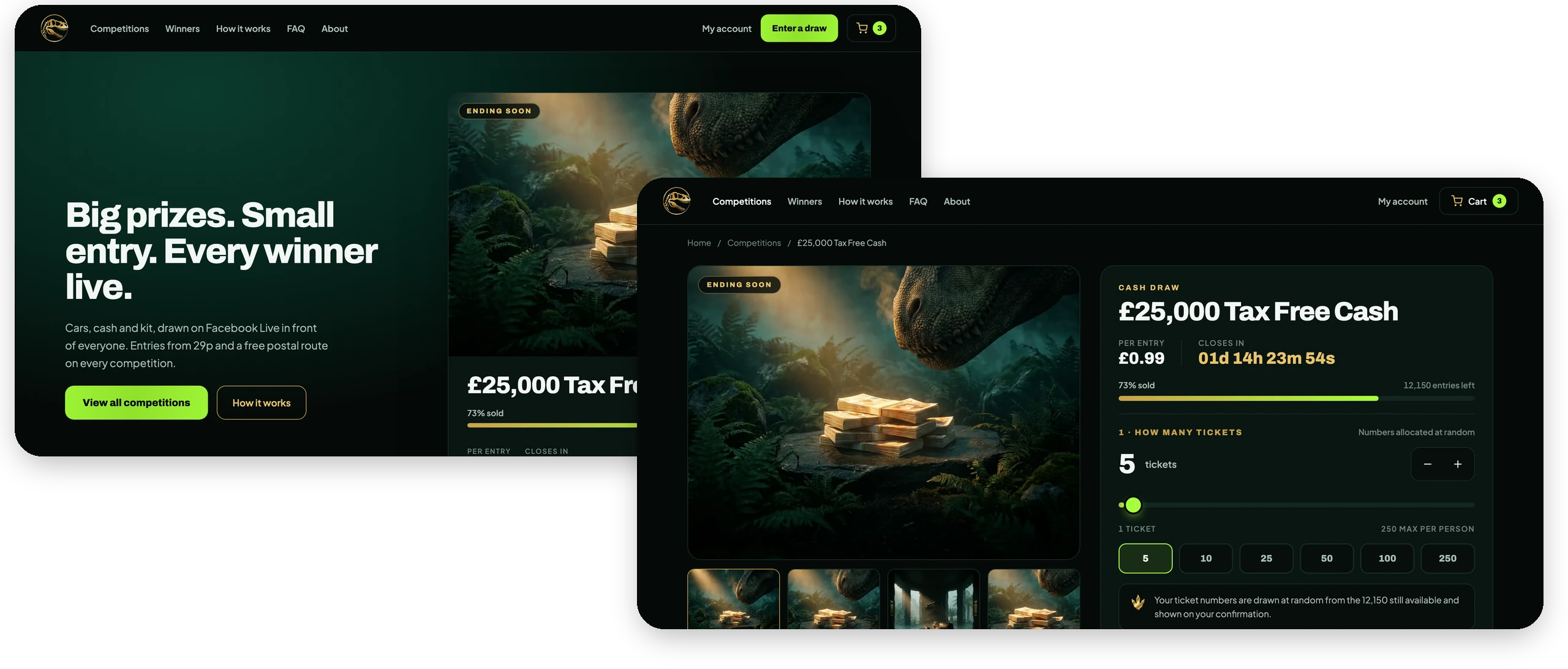
The brief was a premium automotive and lifestyle brand. Dark and confident, with the prize and the proof that it is real both visible on the first screen of every device. A £45,000 car and a £200 games console sit on the same grid, and both had to look deliberate.
The logo set the system. It is a gold theropod skull inside a thin gold ring, over a deep green glow that fades to black. We took three things from it. The radial green glow became the recurring background behind hero prizes, featured cards and section headers, so a Dino page is recognisable from a thumbnail. Gold is kept for prestige: prize values, winners and the brand mark. Action uses a separate vibrant green, so the enter button never reads as a trophy and never collides with a won or sold out state.
The secondary brand mark is a three toed footprint. It marks the 25, 50, 75 and 100 percent points on the entries sold bar, so the bar reads as something walking across as the fill advances. It numbers the steps on the how it works page and stamps the corner of each winner photo. It stays off prize photography, off the competition cards and out of checkout.
What the brief asked for
- Seven prize categories on one grid, from headline cars to lower value prizes.
- The prize and the proof, together, on the first screen of every device.
- Entry from a phone in about a minute: pick a draw, answer the question, choose numbers, pay.
- A free postal entry route linked from every competition.
- Every competition status readable at a glance: live, closing soon, sold out, drawn and cash alternative.
Payments were set up alongside the build
Stripe, PayPal and Shopify Payments all refuse competition and prize draw businesses. Most operators find this out after paying for a website. We cover the detail in why payment providers reject competition websites.
Dino runs on Cashflows, a specialist acquirer that underwrites competition operators in the UK and Ireland. Approval is a merchant application. It needs an accurate account of how entries are sold, what the skill question does, how the free route works and what happens when a draw closes. We prepared that evidence while we built the checkout, so the journey Cashflows reviewed is the same journey customers use.
Compliance sits inside the entry flow
Dino runs skill-based prize competitions under the Gambling Act 2005. The platform enforces the two things that structure depends on. We set out the legal line in do you need a gambling licence.
Every entry needs a correct answer to one multiple choice skill question before it reaches checkout. A wrong answer gets a clear message on the page telling the entrant it does not qualify and to pick again, and they can retry while entries are open. We test that logic before launch, because skill question code that marks correct answers as wrong silently turns away paying entrants.
Every competition also has a free postal route, linked from the competition page itself. The instructions are specific: an unenclosed postcard with the entrant’s name, address, email, date of birth, the competition and their answer. One entry per postcard, arriving before the published closing time. Postal entries have the same chance of winning as paid ones.
Entrants must be 18 or over and UK resident. Every competition shows its per person entry cap before anything is spent. Account holders can set a spend limit or close their account, and Be GambleAware messaging runs across the site. Nera Marketing is a signatory to the DCMS Voluntary Code of Good Practice, in effect since May 2026, and we build against it as standard.
That structure supports a compliant operation. The promoter remains responsible for how each individual competition is run and advertised.
What the platform is built on
The site runs on WordPress and WooCommerce, and Dino owns it outright. The files, the database, the domain and the customer list are theirs. We set out what that ownership means in WordPress versus SaaS competition platforms.
Some specifics that shaped the build:
The odds are on the page before the basket. Each competition shows total entries, the percentage sold, the entries left and the maximum per person. A capped pool makes the odds knowable, and showing the sold count makes them believable. Setting that cap is its own decision, covered in how to price raffle tickets.
Entrants choose their own numbers. The number grid shows every number as free, yours or taken. Lucky dip assigns the next available numbers for anyone who would rather not pick. On a phone the grid runs six columns with 44 pixel touch targets and scrolls inside its own container, so the page around it stays still.
The countdown and the enter button follow the entrant. On every competition page a sticky bar carries the prize, the entry price, the closing countdown and the add to basket button. On mobile the action is always one tap away.
Cash alternatives are stated up front. On vehicle and luxury draws the cash figure appears on the competition page before entry, marked with its own gold outline chip.
Every state has its own design. Live, closing soon, sold out and drawn each have a distinct treatment, and sold out can be told apart from enter now in greyscale as well as colour. Drawn cards show the winner’s first name, town and ticket number. The empty states were designed too. An empty basket points back to the open draws, and the winners page on launch day shows the date of the first draw.
The prize photograph stays clear. In the homepage carousel the prize name, progress bar, price and countdown sit in a card body below the image. Only the status chip sits on the photograph, so the thing being sold is always fully visible.
Moving between pages feels like Dino. Each page change plays a short stomping footprint transition. A dark curtain rises, three gold prints punch into it with a dust burst on each step, and the next page loads underneath. It adds 420 milliseconds in total. We built it as a curtain overlay over a normal page load, so the basket, the number grid and checkout all keep working as WooCommerce expects.
Every draw is published, filmed and checkable
Entries close when the counter reaches zero. The entry list is then locked and published to the competition page. The draw streams on Facebook Live, where a verified random number generator picks the winning number on camera, and the recording stays on Dino’s Facebook page so any past draw can be checked later. Every competition is drawn on its published date, sold out or not. Running the stream itself is covered in how to run a Facebook Live draw.
Winners appear on a dedicated page with their photo, prize, first name, town and the ticket number called on the stream, each marked with a gold claimed stamp. Published winners with real ticket numbers are central to designing a competition site that builds trust.
Launching from zero
Ahead of the full site we put a pre-launch page on Dino’s domain. It shows the six main prize categories and runs a waitlist. Members hear about every competition before it goes public and get first pick of entry numbers, so the first draw opens to a list of people already waiting for it.
What other operators can take from this
An operator launching without an audience has one thing to sell on day one, and that is trust. Dino’s platform puts it on every page. The odds are visible before the basket. The free route is linked from every competition. Every draw is filmed and its entry list published. Payments were approved before launch.
Dino owns the platform, the domain, the files, the database and the customer list outright. That is how we hand over every UK competition website we build.